

The recycling industry has become one of the most important sectors for sustainable industrial development and environmental protection. As industries generate increasing amounts of waste materials, advanced recycling technologies are essential for recovering valuable resources efficiently. Among these technologies, Refining Machines play a major role in improving material recovery, purity, and recycling efficiency.
Refining machines are specialized industrial systems used to purify, separate, and recover valuable metals and materials from recycled waste. These machines are widely used in industries such as e-waste recycling, metal recovery, battery recycling, precious metal refining, and industrial waste processing.
Modern refining technologies help industries reduce waste, conserve natural resources, and support environmentally responsible manufacturing practices.
Refining machines are industrial equipment designed to extract and purify valuable materials from mixed or contaminated waste. These systems use advanced thermal, chemical, mechanical, or electrochemical processes to separate metals and improve material purity.
Refining machines are commonly used for recovering:
Gold
Silver
Copper
Aluminum
Palladium
Platinum
Lithium and battery materials
The primary objective of refining machines is to maximize material recovery while maintaining high purity levels suitable for reuse in industrial manufacturing.
Recycling processes often generate mixed materials that require further purification before they can be reused. Refining machines play a critical role in transforming recovered waste into high-quality reusable resources.
Without proper refining systems, valuable metals may remain contaminated or unusable for industrial applications.
Electronic waste, circuit boards, batteries, and industrial scrap contain significant quantities of precious and non-ferrous metals. Refining machines help recover these materials efficiently through advanced separation and purification processes.
Precious metal refining systems are widely used in:
E-waste recycling plants
Jewelry industries
PCB recycling facilities
Battery recycling industries
Metal recovery plants
Recovered metals can then be reused in electronics manufacturing, automotive industries, renewable energy systems, and industrial production.
One of the most important functions of refining machines is improving material purity. High-purity metals are essential for industrial manufacturing because impurities can affect product quality and performance.
Advanced refining technologies help:
Remove contaminants
Separate mixed metals
Increase metal purity levels
Improve resale value of recovered materials
High-quality refined metals often have greater market demand and commercial value.
Refining machines contribute significantly to sustainable recycling by reducing dependence on mining and raw material extraction.
Mining operations consume massive amounts of energy and can cause environmental damage. Recycling and refining existing waste materials help conserve natural resources and reduce industrial pollution.
Sustainable refining practices support:
Resource conservation
Reduced carbon emissions
Lower energy consumption
Eco-friendly manufacturing
The e-waste recycling industry heavily depends on refining technologies to recover valuable materials from electronic scrap.
Electronic waste contains:
Gold-plated connectors
Copper wiring
Silver contacts
Rare metals
Aluminum components
Refining machines help separate and purify these materials efficiently, increasing the profitability and sustainability of e-waste recycling operations.
The rapid growth of electric vehicles and energy storage systems has increased the demand for battery recycling technologies.
Modern battery refining systems recover:
Lithium
Cobalt
Nickel
Manganese
Copper
These materials are highly valuable and essential for manufacturing new batteries and energy storage products.
Refining machines play a critical role in creating a circular economy for battery materials.
Modern refining systems use automation and advanced control technologies to improve recycling efficiency and reduce operational losses.
Advanced features may include:
Automated process control
Temperature monitoring systems
Chemical dosing systems
AI-based sorting technologies
Real-time material analysis
These innovations improve productivity, reduce waste generation, and maximize resource recovery.
Refining machines provide significant financial advantages for recycling businesses and industrial operations.
Benefits include:
Increased recovery of valuable metals
Higher material resale value
Reduced raw material costs
Improved operational profitability
Lower waste disposal expenses
Industries investing in efficient refining systems often achieve better long-term returns and operational sustainability.
Modern refining machines are designed with advanced safety and environmental protection systems.
Key safety features include:
Emission control systems
Dust collection units
Chemical handling safety mechanisms
Temperature control systems
Wastewater treatment integration
These technologies help industries comply with environmental regulations and maintain safer working conditions.
The future of recycling is becoming increasingly dependent on advanced refining technologies. Industries are now adopting:
AI-driven refining systems
Automated metal recovery technologies
Smart monitoring systems
Energy-efficient refining processes
Eco-friendly chemical refining methods
As global recycling demand continues to rise, refining machines will become even more important for sustainable industrial development and resource recovery.
Refining machines play a vital role in modern recycling industries by improving material recovery, increasing metal purity, and supporting sustainable waste management practices. These advanced systems help recover valuable resources from industrial waste, electronic scrap, batteries, and metal residues efficiently.
By reducing dependence on mining, lowering environmental impact, and maximizing resource utilization, refining machines contribute significantly to the growth of sustainable and profitable recycling operations. Investing in advanced refining technology is becoming essential for industries aiming to improve efficiency, environmental responsibility, and long-term business success.

In today’s digital world, electronic devices have become an essential part of da...
Read More
The rapid growth of technology has transformed industries and daily life, but it...
Read More
Industrial machines are the backbone of manufacturing, recycling, construction,...
Read More
The recycling industry is growing rapidly as businesses and industries focus mor...
Read More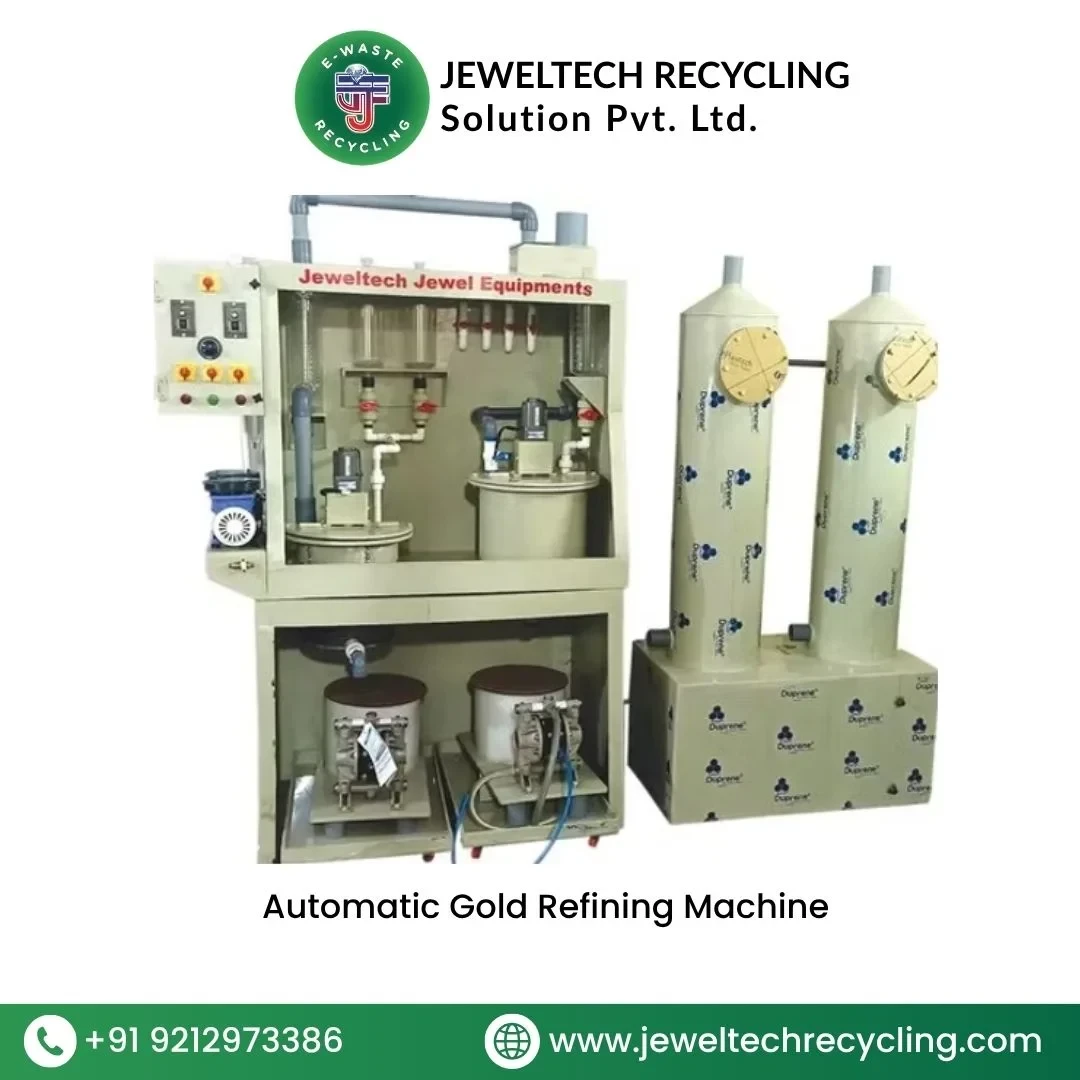
Recycling has become an essential part of modern industrial operations. As indus...
Read More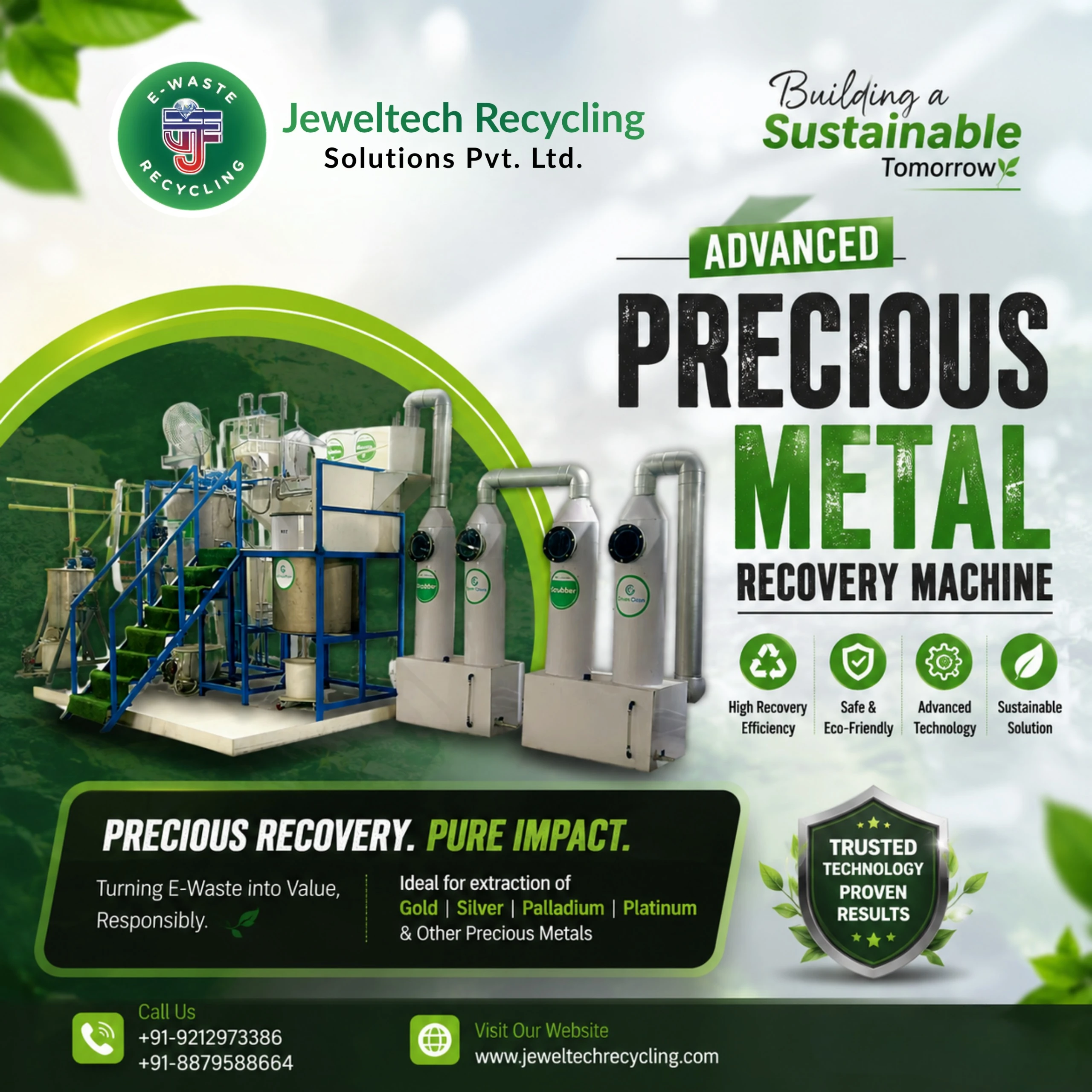
A PCB precious‑metal recovery plant is a facility that processes printed circuit...
Read More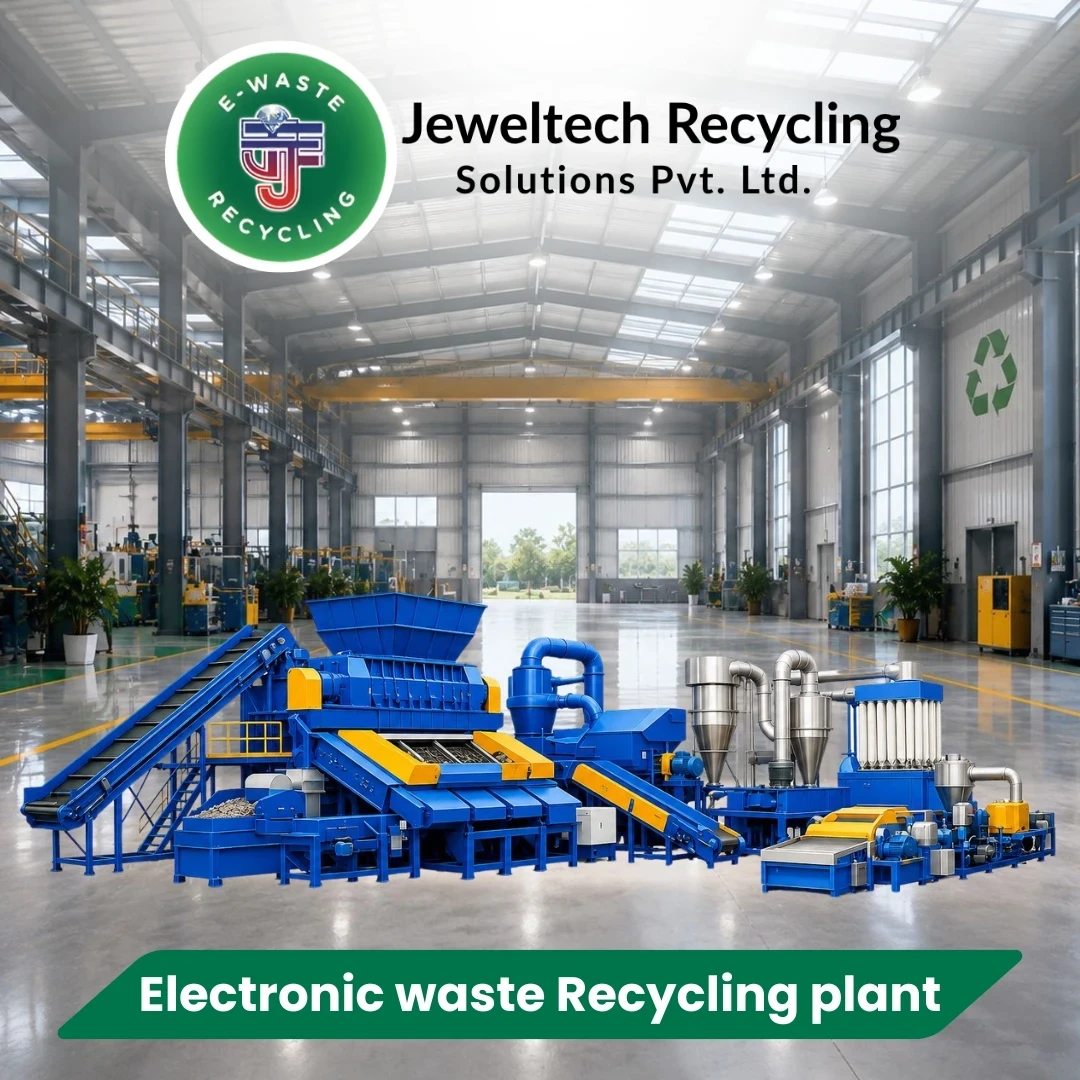
If you’re investing in an E waste recycling machine or planning a full E waste r...
Read MoreCopyright© 2026 Jeweltech Recycling Solutions Pvt. Ltd., All Rights Reserved.